Gas Detection
Honeywell BW – Icon MULTI GAS MONITOR
On Request
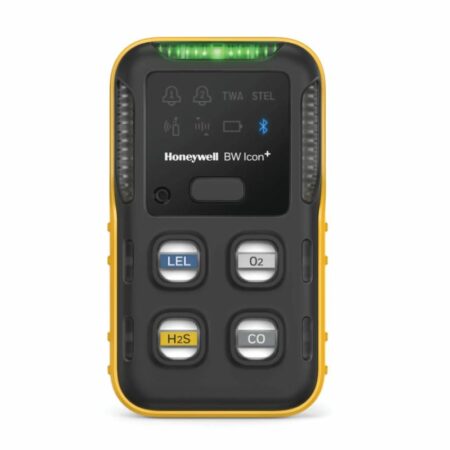
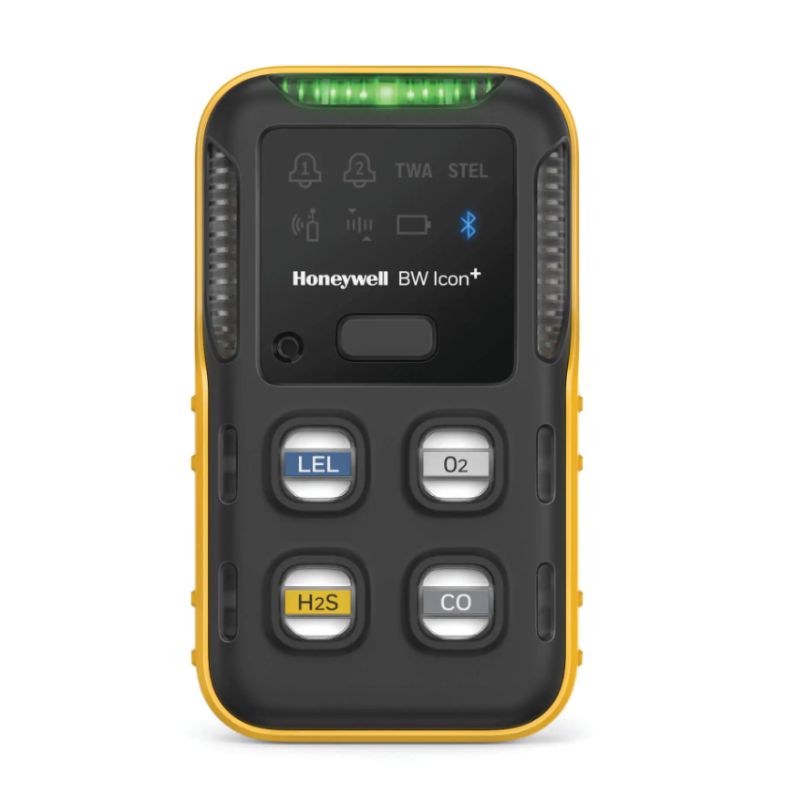
The Honeywell BW Icon+ is a serviceable multi-gas detector with icon-based alerts, long runtime, IR LEL sensor, and flexible sensor options. Fill in the form below to get yours!

Have questions or need expert advice? Our team is ready to assist you. Chat with a knowledgeable expert in real-time and get the information you need.
The Honeywell BW Icon+ Multi Gas Monitor is a serviceable four-gas detector designed to maximise detector lifespan while keeping operation simple and intuitive. With a choice of six interchangeable sensors, the Icon+ offers flexibility across a wide range of applications, helping to reduce long-term ownership costs without compromising safety.
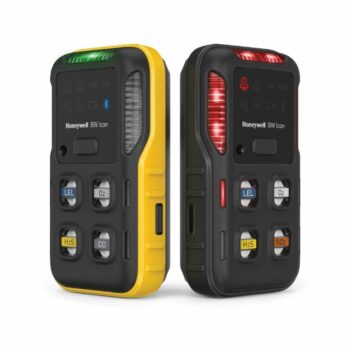
Just like the original fixed-life Honeywell BW Icon, the Icon+ features an industry-first icon-based display that removes the need for live gas readings. Instead of interpreting numbers, workers see clear, intuitive icons showing gas levels and device status. If a gas is detected, the bell icon illuminates alongside a sensor-specific indicator, allowing for immediate recognition and fast response—no specialised training required.
The Icon+ is also equipped with advanced infrared LEL sensor technology, which is resistant to contamination from greases and silicones, ensuring accurate and reliable detection of combustible gases. It delivers up to 2 months of continuous runtime on a single 4.5-hour charge, or up to 4 months when powered down between shifts.
Built for tough conditions, the device is IP66/68 rated for dust and water ingress, yet remains lightweight and comfortable to wear. With one-button operation, a rechargeable battery, and multiple configurations available, the BW Icon+ is a smart, adaptable solution for teams seeking both performance and simplicity.
Can’t find your answer? Get in touch with our team.
No, however we would suggest that you undertake a Confined Space Course which covers the use of gas monitors. Our sister company Citrus Training offers these courses.
No. Whilst a monitor can initially pass the start-up process and indicate that the monitor is functional, what this doesn’t tell you is if gas can actually reach the sensor, as the sensor membranes can become clogged with muck, dust and particles that are not visible to the human eye and thus not allowing the gas molecules to reach the sensor and react in a timely fashion.
Taking into consideration the ATEX directive, manufacturer recommendations and your own company risk assessments, it is recommended that you bump test your monitor before every use, it is true that the law is not clear and doesn’t use the all-important word “MUST” and the regulation only surrounds flammable gases, not toxic, but you can guarantee that the authorities would want to see evidence of such testing should the worst happen!