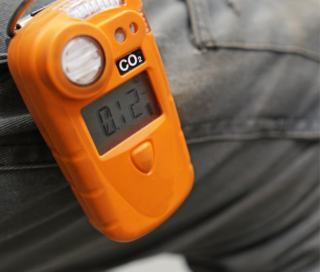
What makes us different?
We work with leading manufacturers in fixed gas detection, from Crowcon to Monicon, to ensure you get the system to meet your needs.
From design and installation to servicing, we handle your new systems and also maintain existing ones.
Our engineers are manufacturer-trained in the installation and maintenance of Fixed Gas systems, and we work closely with manufacturers to ensure we stay ahead of emerging technologies, to provide you with the best possible solutions.

Solutions Designed Around You
Our solutions are application-driven and tailored to your specific requirements. Whether you need a single-point or multi-point detection system, our Gas Solutions Division (GSD) will work with you to design and specify the ideal setup. Here’s what sets us apart:
- Our engineers have 28+ years of experience in gas detection
- Over 400 installed systems and counting
- Three-year service and parts contracts for peace of mind
- Site Gas Mapping and IIOT Cloud Reporting also available, should you need it
- Real-time cloud-based monitoring with trend data, email/SMS alerts, and internet compatibility
- Confined space trained engineers for safe and compliant installations
- Fully certified installation team (IPAF, COMPEX, SSSTS, SMSTS, CSCS)
Already have a system installed? We maintain systems from various manufacturers – meaning you can still benefit from our service excellence and client support.
Partners and MANUFACTURers we work with
Crowcon Gas Detection
Crowcon, part of the Halma Group, offers advanced gas detection with 4-20mA, Modbus RS485, and MPS sensor technology for reliable Hydrogen detection. Their EMEA division designs custom sampling systems for tailored solutions.
Honeywell
Honeywell gas detection equipment is recognised worldwide for its quality and reliable design and manufacture. Their portfolio includes detectors ideal for the offshore oil and gas industry in particular.
Teledyne Gas & Flame Detection
Teledyne Gas & Flame Detection combines products from Detcon, Simtronics, Oldham, and GMI to offer fixed-point detectors and controllers known for high quality and reliability to our customers.
Monicon
Since 1998, Monicon Technology has produced innovative concepts now standard in the Fixed Gas Detection industry. They work with us in partnership and trust us for system design, installation, and post-installation support.
Our Process
By collaborating closely with you and leveraging our expertise, we ensure a seamless experience from design to installation:
- Assess site requirements based on your risk assessment
- Conduct a free site survey
- Design a custom system with site drawings
- Provide a detailed project proposal
- Install the system based on as-built drawings
- Deliver site commissioning and user training for your team
- Offer a comprehensive service and parts package (1, 2, or 3 years)
Safe Contractor Accreditation
Altitude Safety’s Safe Contractor Accreditation is a key part of our commitment to compliance. This accreditation, along with SafePQQ verification, align with SSIP and PAS91 requirements, allowing us to deliver market-leading health and safety standards. Simply put, you can rely on us for your safety needs.
360° Safety Solution
Our innovative 360° safety solution combines expert consultation, on-site visits, and industry-leading training, providing you with a trusted, end-to-end safety solution. As part of this solution, our sister company, Citrus Training, provides tailored confined space and rescue programs to our customers. Many clients opt for Citrus to deliver customised programs in areas where fixed gas detection systems are installed. Get in touch to find out more about how we can also fulfil your training needs.
Get in touch
Need consultation on the perfect Fixed Gas Detection System for your business? Contact us today.
Fixed Gas Case Studies
Here are just a few of the clients we have worked with to fit their Fixed Gas Detection solutions:

What is fixed gas detection
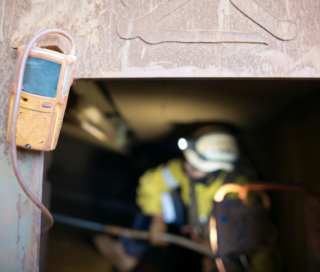
A fixed gas detection system provides an early warning of hazardous gas accumulation, protecting both people and property. Strategically placed sensors detect gas before it reaches dangerous levels, allowing for timely intervention. These systems typically consist of sensors, control modules, and alarm mechanisms, available either as individual units or combined into a single integrated solution, depending on the specific application and site requirements.
Sensor & Alarm Placement
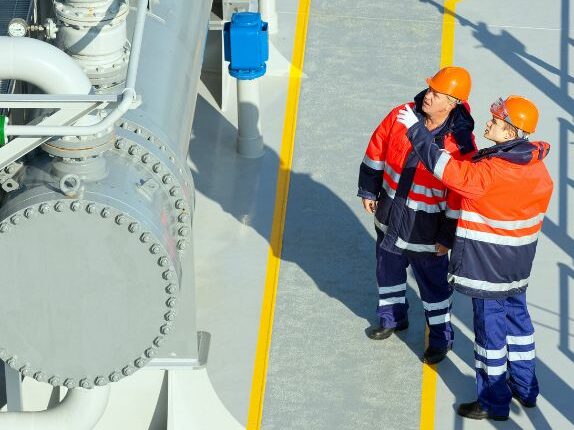
Accurate positioning of sensors and alarms is critical to ensuring effective gas detection and maintaining safety. The control panel should be prominently visible, easily accessible, and situated away from hazardous zones. Sensor placement must provide continuous coverage, with built-in redundancy, such as duplicate or triplicate sensors, to mitigate the risk of false alarms or system failures compromising safety. Effective positioning should consider plant layout, ease of maintenance access, and potential gas ingress points, especially in confined or enclosed spaces.
Alarms should be strategically positioned for maximum visibility to enable a swift response in the event of a hazard. Traffic light towers offer an immediate and highly visible indication of system status, reducing the need for personnel to consult the control panel directly. This improves situational awareness and accelerates response times, thereby enhancing overall safety.
Identifying Gas Sources & Dispersion
Understanding potential sources of gas release is essential for effective sensor placement. Leaks often originate from process equipment, pipework, or valve connections, making these critical zones for targeted monitoring.
Gas dispersion behaviour also plays a key role in determining sensor location. The density of the gas dictates whether sensors should be installed at high or low levels—for instance, methane tends to rise, whereas carbon dioxide settles near the ground. Adhering to manufacturer guidelines further supports optimal sensor placement and accurate gas detection.
Environmental & Safety Considerations
Several factors impact sensor placement and performance, including the layout of process equipment, ATEX-rated zones, and environmental conditions such as temperature fluctuations, cleaning processes, and outdoor exposure.
Additionally, ventilation patterns, gas type, and other safety concerns—such as personnel location, equipment protection, and maintenance access—must be taken into account to ensure reliable system performance.
Alternative Solutions
For sites looking to streamline operations, transmitters can connect directly to a site’s PLC system via a 4-20mA loop, eliminating the need for a separate control panel. Alternatively, customisable HMI screens with Modbus RTU RS485 communication provide clear alarm indications and site layout programming, enhancing system control and visibility via the 4-20mA loop, eliminating the need for a separate control panel. Alternatively, we offer customisable HMI screens with Modbus RTU RS485 communication for clear alarm indication and site layout programming.
Need to talk to us?
Have questions or need expert advice? Our team is ready to assist you. Chat with a knowledgeable expert in real-time and get the information you need.
Frequently Asked Questions
Can’t find your answer? Get in touch with our team.
Fixed gas detection systems serve as the first line of defence in hazardous environments.
These permanently installed detectors continuously monitor designed areas for the presence of specific gases.
Upon exceeding pre-determined safety thresholds, they trigger immediate alarms and initiate pre-programmed safety protocols.
Various sensors exist to detect a wide range of gases, including:
- Flammable gasses (e.g., Methane, Propane)
- Toxic Gases (E.g., carbon monoxide, hydrogen sulphide)
- Inert gases (E.g., Nitrogen)
They are crucial in various settings such as: Industrial facilities, Chemical plants, Oil & Gas refineries, Water treatments plants, Pools and spas, Breweries & distilleries, Food processing & packaging.
Common types include:
- Catalytic bead sensors (flammable gases)
- Electrochemical sensors (toxic gases)
- Infrared sensors (various gases)
Calibration should be carried out as per the manufacture’s recommendation which is typically every six months.
An alarm sounds, and after that, pre-programmed actions are initiated, such as: Shutting down equipment, activating ventilation systems, sending alerts to personnel.
Regular maintenance is crucial for ensuring the system’s accuracy and reliability. This includes; Sensor functionality tests, Calibrating filters & sensors according to required parameters, Verifying alarm and control systems, Environmental compliance.
Requirements vary depending on the location and industry. Consulting relevant regulations such as those found at www.hse.gox.uk (for the UK) is crucial.
While extremely effective when correctly installed, fixed gas detectors have limitations such as: They can only detect pre-configured gases. May not cover every area effectively due to fixed placement.
Above all, a comprehensive safety approach includes; Employee training on gas hazards and emergency procedures. Proper ventilation systems. Personal protective equipment (PPE)